When we began brainstorming about what each of us wanted to visit during our trip through South America, one of my must-do’s was visiting the Amazon rainforest in Peru. It wasn’t just about seeing the Amazon, I specifically dreamed about seeing the macaws (guacamayas) fly freely. My parents had been some years before to Peruvian Amazon and my mom said that watching the macaws fly was one of the most beautiful and emotive things she has ever seen.
After some research on where and what to do in the Peruvian Amazon, we both independently sent a request to Rainforest Expeditions. I got a reply from them saying it was funny that I had written that day, since they had just received a similar request from a person with the same last name, which of course, was Tobi 🙂 So it was settled – this was the place we both wanted to go. After 1 week in Peru, after enjoying amazing meals in Lima, discovering the Sacred Valley, a day trip to Machu Picchu and finally taking a couple of days off in Cuzco, we arrived in Puerto Maldonado. Due to our time constraint we opted for a 50 minute flight instead of making the 8 hour drive from Cuzco to Puerto Maldonado along the new Interoceanic highway.
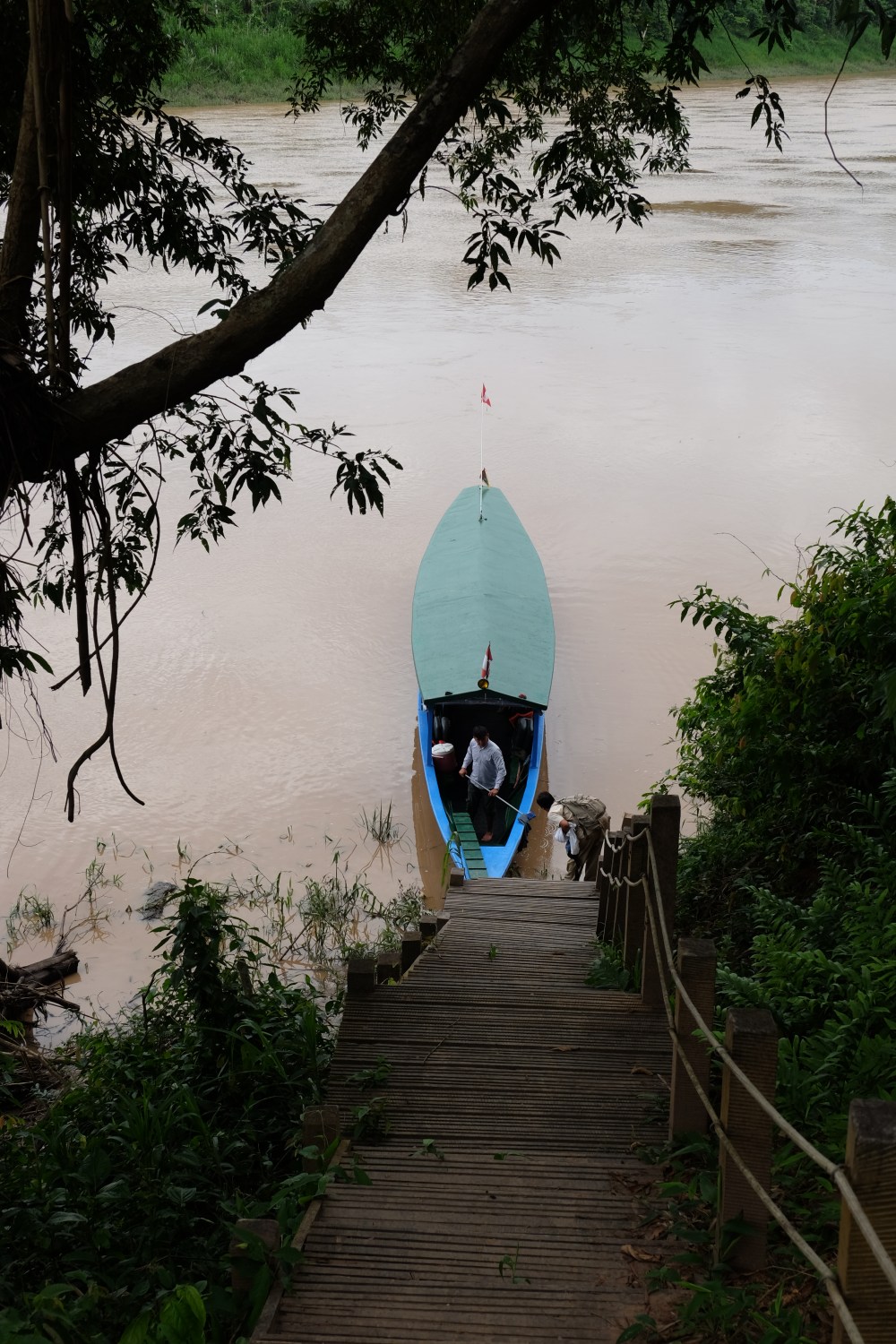
You board at 3’399 meters in the highlands and land 50 minutes later in the humid and hot rainforest at approximate 200 meters. We were picked up by Rainforest Expeditions and went straight to the office where we waited for the other guests and our guide to arrive. Once everyone was ready and we had packed only the necessary items for the 5-day trip and deposited the rest, we drove in a mini bus to the El Infierno community port and boarded our motor-canoe to start the 3 hour trip to Refugio Amazonas.
The Refugio is a wonderful lodge in the middle of the jungle where we spent the first night. The lodge is very luxurious considering that you’re in the middle of nowhere. The rooms have no windows so you can enjoy the sound of the jungle, but you have your own in-room bathroom and your mosquito net is prepared before you go to bed so you don’t need to worry about all kind of insects (let’s leave it at that) creeping in the middle of the night.


Here we had our first of many great meals with our wonderful guide, José Luis. Or as Tobi describes him, “the Chuck Norris of all Amazon guides”. He knows his way around the jungle like no other guide that we saw during our trip. Thanks to him (and the big luck that the two of us were the only ones in our “group”) we managed to see and learn so much about so many animals and insects that I had to write them down every night in my journal in order to keep track. After dinner in Refugio, one of the local guides shared a presentation about the project behind the travel agency, the major issues that the Amazon rainforest is facing such as gold mining and deforestation, and how ecotourism can help. He also shared his personal experience and why he rather be a guide in ecotourism and contributing to conserve the Amazon, instead of gaining a lot more money while destroying the environment working in the thriving illegal gold mining business.

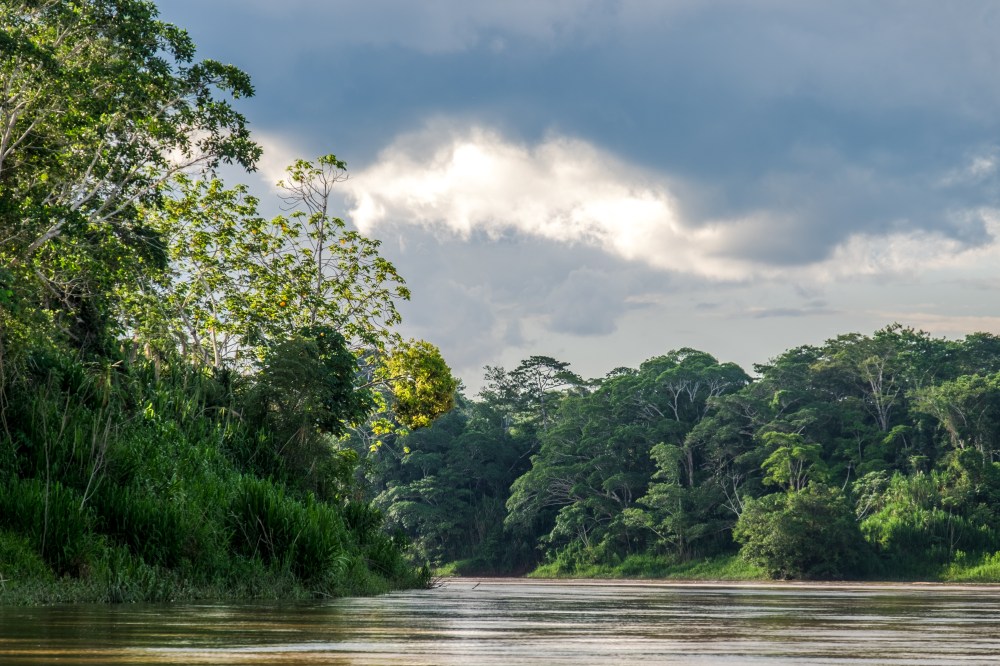
On the second day, we embarked again on a 4 hour canoe trip upstream to the TRC (Tambopata Research Center), the only accommodation in the Tambopata National Reserve. TRC is home to the Tambopata Macaw Project. In their own words, “The Tambopata Macaw Project is a long term research project on the ecology and conservation of macaws and parrots in the lowlands of southeastern Peru”. The project started in 1989 and is now led by one of its founders, Dr. Donald Brightsmith at Texas A&M University. There are a number of volunteers working at TRC, where they spend their days observing and monitoring the macaw and parrot activities in the clay licks, climbing up to the trees to inspect the nests and gather data for their long year research. We learned a little bit about their work and research one night after dinner, when one of the volunteers spent 1 hour with us sharing information about the project and her personal experience at TRC.
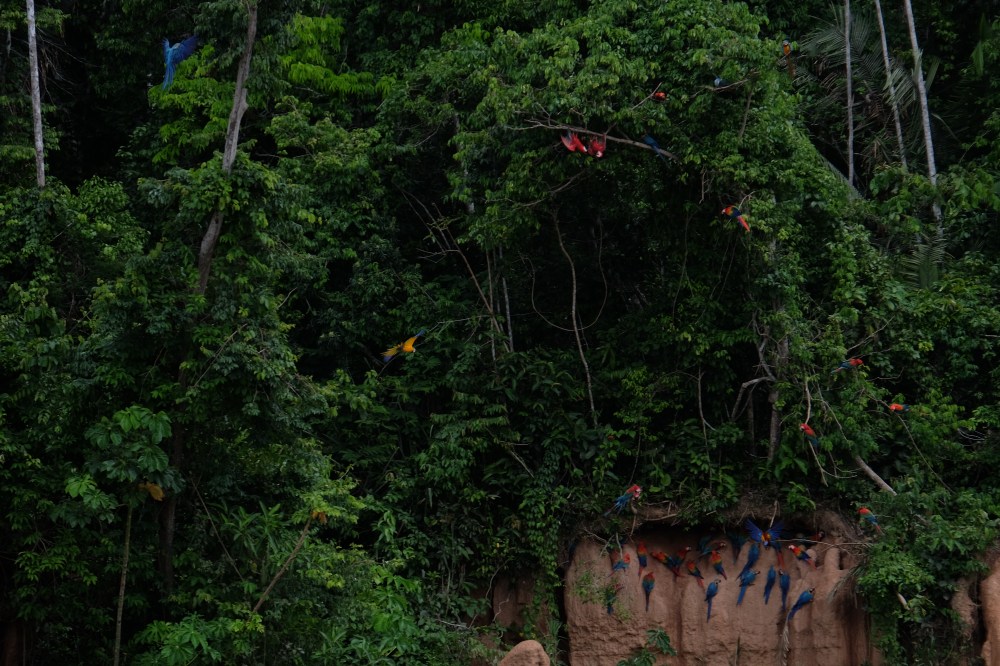
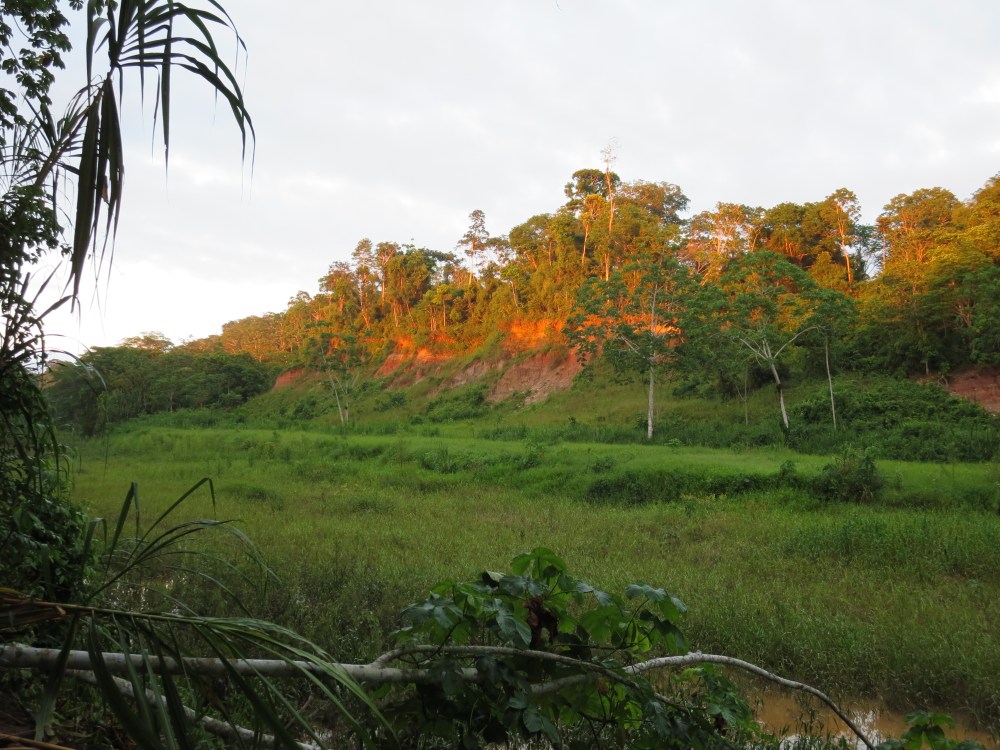
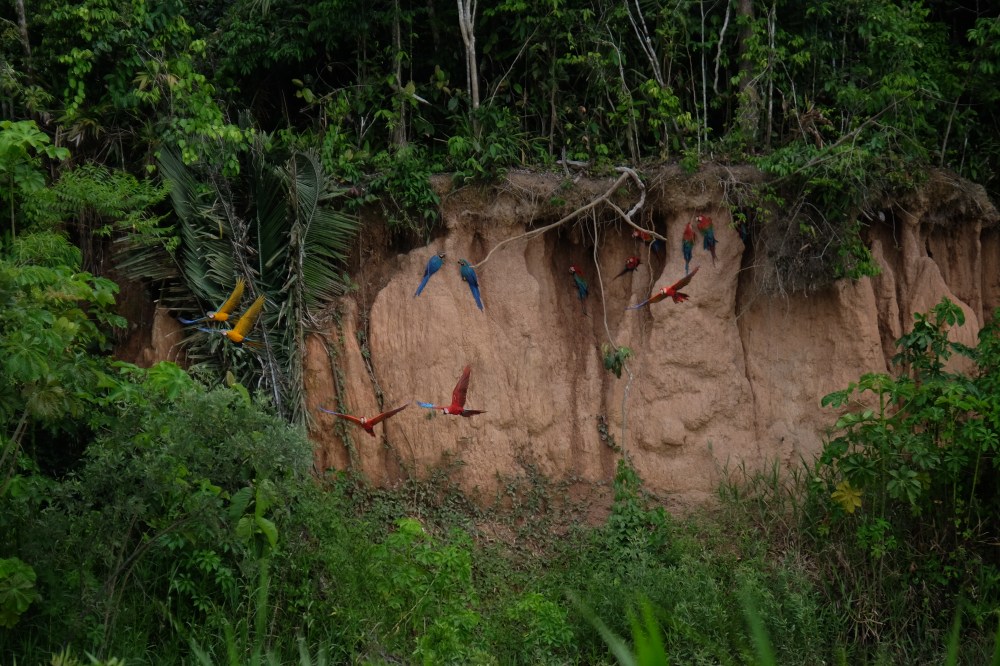
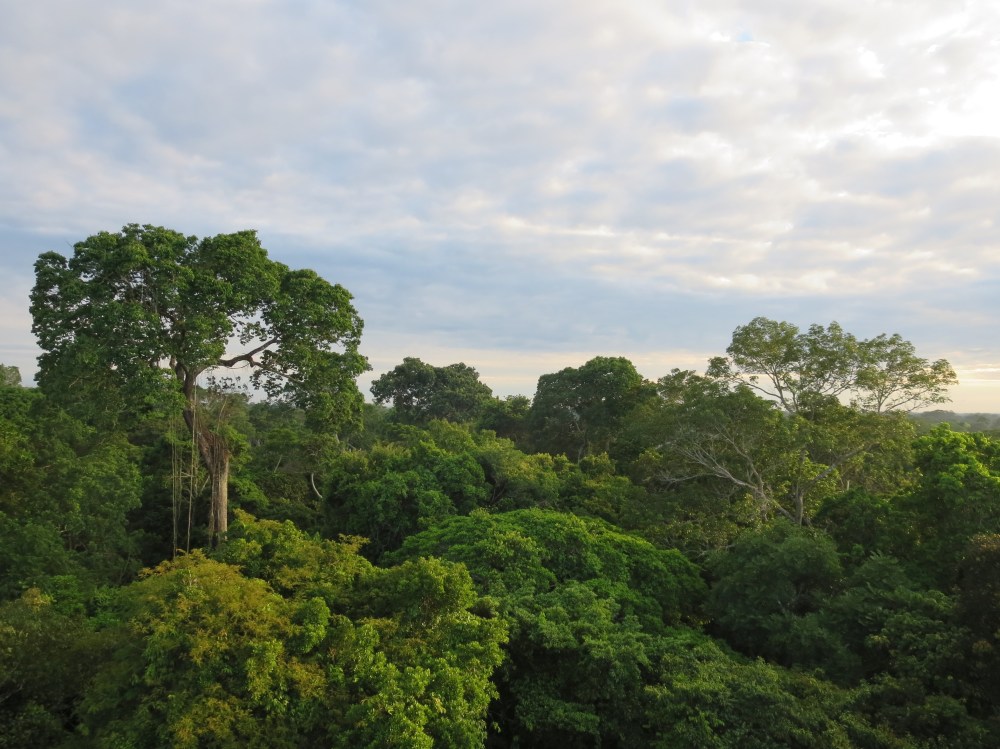
During the 4 days and 4 nights that we spent at TRC, we had the best time! We would get up very early in the morning to do a morning round in the jungle around the lodge. One morning we were super lucky and were able to see the sunrise across the large clay lick close to the TRC. Here we could admire first the parrots in different sizes and colors and later the macaws arriving for their “morning meal”. After breakfast we would do a second round until midday, have an always delicious lunch and a the best naps in the hammock and then go about our third round in the late afternoon. Every time we saw lots of animals and insects and the few times we didn’t see anything during the our round, José Luis would look for the animals. He would suddenly stand still, listen, “say” something to the jungle and hear the response. Often this would result in us running behind him in our rubber boots until he would again stop and show us where to look or wait until the animals passed by. It was just fantastic!

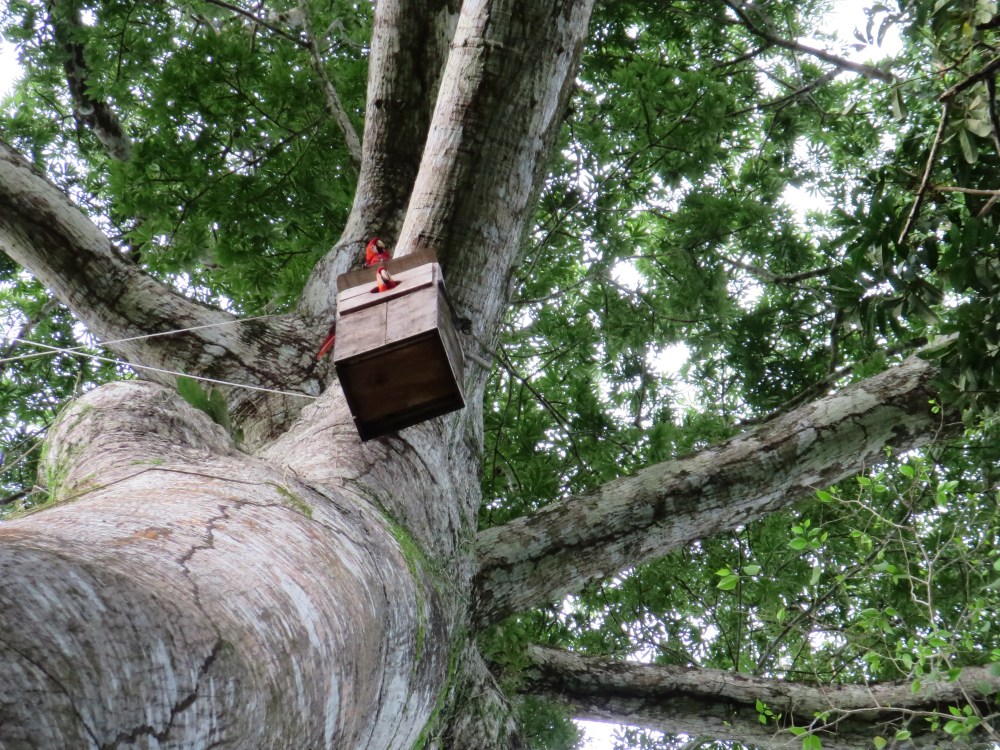
Our highlight were of course the macaws. We managed to see at least 50 flying freely just as I pictured it on our second day on the way to the TRC. Then the one morning session on the clay lick, and then every day at least we saw a “Chico” during breakfast or lunch time. The “Chicos” are the first hand-raised and released into the wild macaws who return to the TRC and hang around the lodge trying to steal your papaya or bread. We also managed to see a couple of parents protecting their nest in the nearby trees. And on our last day, we were even allow to follow the researchers to one of these nests to check on Calvin, a 4-day macaw who was part of an experiment involving a “robo-egg”. Almost 1 1/2 years later I’m wondering – what happened to Calvin? 🙂


I grew up seeing macaws in Guatemala. Unfortunately, not freely but as a common exotic pet which I admired from a respectful distance. I loved them and feared them at the same time – I remember my grandmother telling me as a little girl not to get too close since they could bite off your finger (I guess she had a bad experience). And even though I always loved to see them in hotel gardens, I felt a bit sad for them.

Because of their vivid colors and ability to talk, macaws have long been hunted and sold as pets to the tragic extend that they have been endangered. And as I learned in Peru, once a wild macaw is removed from its natural habitat, they are often unable to reintegrate and often starve. Also, macaws like parrots, are generally monogamous and they mate for life. Thus once a macaw is loses his mate, the chances that it will find another companion are very low. And last but not least, due to the deforestation in their habitat, macaws cannot find enough trees or dead palms in order to build their nest, thus the population is rapidly decreasing all across Central and South America.
If you want to experience the Amazon to its fullest, see the macaws and other wild animals in their natural habitat, support the local community and the valuable research done at the Tambopata Research Center, I can certainly recommend booking a trip with Rainforest Expeditions and embarking in this unforgettable experience!
*Since our visit in December 2016, the TRC has been renovated. Watch the new video here.
#macaws #TRC #peru #guacamayas #amazonas
 Indiana Juana